
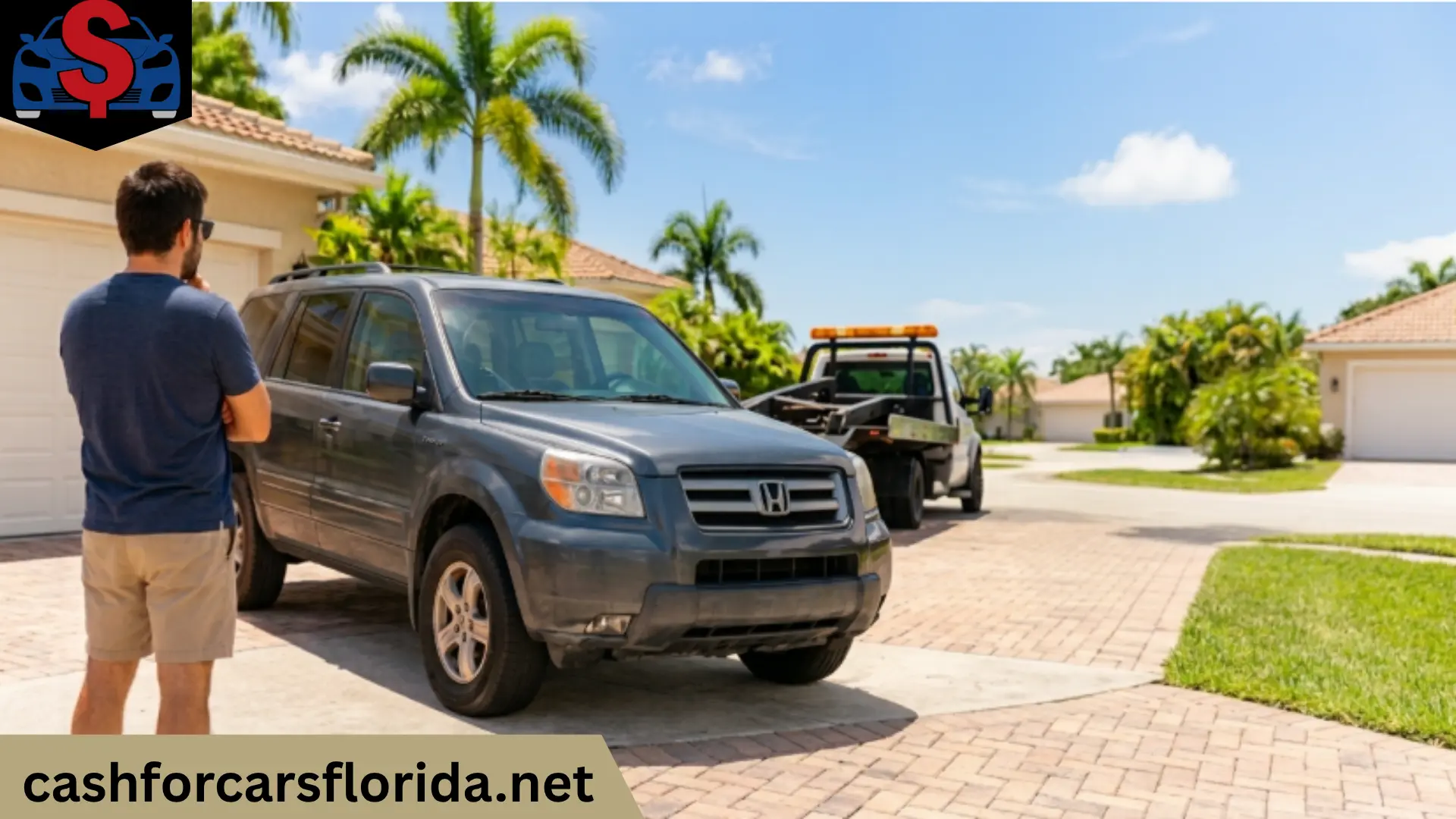
Your Honda Pilot has been dependable through countless Florida journeys. It hauled kids to soccer practice, carried camping gear on vacations, and navigated through years of Florida commutes and hurricane seasons. But now you’re facing the reality that keeping this vehicle costs more than it’s worth. Expensive repairs loom, monthly maintenance drains your budget, and your driveway space feels wasted on an underutilized SUV. You’re asking if it finally makes financial sense to sell my Honda Pilot for cash rather than continuing to pour money into repairs and insurance.
This comprehensive guide explains why thousands of Florida residents choose to sell Honda Pilot vehicles for cash and walks you through every step from getting an instant online quote to receiving payment in 48 hours or less.
Why More Florida Drivers Decide to Sell My Honda Pilot for Cash Today
The Honda Pilot remains one of the most popular three-row family SUVs on American roads. Families initially love these vehicles for their spaciousness, reliability, and capability. However, there comes a predictable point when every Pilot transitions from being an asset to becoming an expensive liability. Understanding the specific reasons driving Florida owners to sell my Honda Pilot for cash helps you recognize whether now is your time to make this decision.
The Unexpected Repair Cost Reality
Honda Pilots with higher mileage frequently require expensive transmission repairs, suspension component replacement, or complex electrical system diagnostics. A single transmission repair on a Pilot typically ranges from $3,000 to $5,000 depending on the specific model year and transmission type. Suspension components wear significantly faster in Florida due to constant exposure to road salt and high humidity levels that accelerate corrosion.
When accumulated repair costs climb to 50 percent or more of your vehicle’s current market value, continuing to own the Pilot becomes economically illogical. At this crossroads, deciding to sell my Honda Pilot for cash eliminates the stress of gambling on whether the next major system will fail.
Lifestyle Changes and Space Requirements Evolving
Family circumstances transform over time. Children graduate and move away. Your need for a three-row SUV with eight passenger seating capacity suddenly vanishes. A vehicle you once needed daily now sits idle most weeks, consuming valuable driveway real estate.
This space inefficiency costs real money. Garage and driveway space could accommodate a more practical vehicle or generate additional storage value. Insurance premiums for an unused three-row SUV represent unnecessary monthly expenses.
The Multiple Vehicle Accumulation Problem
Many households gradually accumulate vehicles that serve no practical purpose. A first generation Pilot becomes the rarely-driven backup vehicle. These orphaned vehicles consume space, require quarterly maintenance to stay functional, and generate ongoing insurance costs even during months of non-use.
Identifying and selling surplus vehicles generates immediate cash while eliminating recurring monthly expenses. Your family might operate more efficiently with one fewer vehicle than with multiple underutilized options.
Calculating the True Time Value Equation
Even if your Pilot technically “still runs,” the cumulative annual cost of ownership surprises many people when properly calculated. Add together your monthly insurance premiums, quarterly registration fees, annual inspection costs, and inevitable maintenance expenses. For an older Pilot, this total frequently exceeds $2,000 to $3,000 annually.
That ongoing money could redirect toward investments, savings, or experiences providing greater personal value than maintaining a depreciating SUV.
Florida’s Unique Environmental Impact on Vehicle Depreciation
Florida’s subtropical and tropical climate uniquely accelerates vehicle depreciation compared to other American states. Salt air from coastal regions, year-round intense UV radiation, high humidity, and frequent heavy rainfall create a corrosive environment hostile to vehicles.
A Honda Pilot that might hold respectable resale value for 8-10 years in Arizona or Nevada depreciates dramatically faster in Florida. The smart move involves selling while your vehicle still retains meaningful value rather than watching that equity evaporate through climate damage.
How to Get an Instant Online Quote When You Want to Sell My Honda Pilot for Cash
Selling your Honda Pilot for a good price is now easier than ever. You can get cash offers without visiting dealerships, spending hours calling different buyers, or waiting several days for a reply. Modern online quote systems deliver instant preliminary valuations based on your vehicle’s specific details and condition.
Gathering Your Honda Pilot’s Essential Information Before Quoting
Before starting the quote process, compile your vehicle’s complete specification information. You’ll need the production year, current mileage reading, trim level designation (LX, EX, Touring, Elite, etc.), and general condition assessment.
Understand that a 2018 Honda Pilot EX with 95,000 well-maintained miles receives a fundamentally different valuation than a 2012 Pilot LX showing 150,000 miles with documented mechanical issues. Accuracy regarding mileage proves essential because professional buyers verify odometer readings during in-person inspection.
Honestly describe all visible damage and mechanical problems. Dents and cosmetic damage get factored into calculations separately from mechanical issues. A Pilot featuring a functioning engine and transmission but displaying significant body rust receives valuation distinct from one experiencing transmission problems or engine concerns.
Disclose your title status clearly. Whether you hold a clean title, salvage title, flood title, or rebuilt salvage title dramatically affects your quote accuracy. Buyers research title status anyway, so being upfront prevents frustrating quote adjustments after professional inspection.
Understanding the Online Quote System Process
Visit the cash buyer’s website and locate their quote tool prominently featured on the home page. Enter your Pilot’s information sequentially starting with production year, make, and model. The system narrows available trim level options once you specify these basic details.
Input your current mileage honestly and completely. High-mileage vehicles receive lower quotes, but discrepancies between claimed mileage and actual mileage discovered during inspection create complications. The preliminary system might display estimated values at this stage, but recognize these represent rough preliminary calculations based on your information.
Select your vehicle’s condition category from options like excellent, good, fair, or poor. Be realistic about your Pilot’s actual condition. A vehicle showing regular wear and tear appears distinctly different from one featuring accident damage or significant mechanical issues.
Answer detailed questions about mechanical function. Does your engine run smoothly? Does your transmission shift without hesitation? Are any warning lights illuminated on your dashboard? These specific operational details matter significantly for accurate valuation.
The Critical Transition from Preliminary Quote to Final Offer
After submitting your information, the system calculates an estimated value representing the vehicle’s general category and condition tier. This preliminary number serves as a starting point only. Don’t expect this figure to equal your final offer since it’s entirely based on self-reported information.
A qualified representative typically contacts you within hours or by the next business day. They ask follow-up questions clarifying specific details. They might request photos showing your Pilot’s overall condition or documenting specific problem areas. This conversation enables them to provide substantially more accurate offers than the preliminary system can generate.
After gathering complete information, they present your official offer in writing. This offer typically remains valid for several days, providing adequate time to consider and decide whether to proceed.
The entire process from initial quote submission to receiving your final offer usually requires less than 24 hours. For numerous people, this represents the fastest possible way to get cash for their vehicle without listing advertisements, showing the vehicle to endless strangers, or engaging in exhausting negotiations with private buyers.
How the Free Towing Process Works Step by Step When You Sell My Honda Pilot for Cash
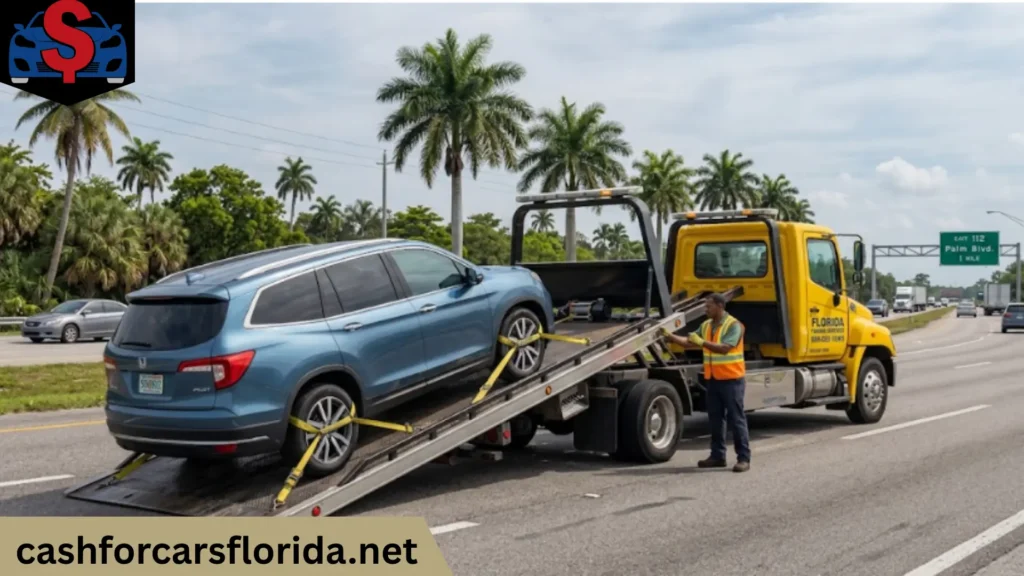
Once you accept a cash offer, the pickup and towing process begins immediately. Understanding this entire process eliminates anxiety about what happens next and prepares you for a smooth transaction.
Scheduling Convenient Pickup Times
After accepting an offer, you’ll schedule a pickup time accommodating your personal calendar. Reputable cash buyers offer flexible scheduling options including morning, afternoon, and weekend appointments. This flexibility eliminates the need to arrange your schedule around the buyer’s limited hours.
You’ll receive written confirmation of your appointment with a specific time window. The driver contacts you as they approach your location. This courtesy call provides adequate time to prepare and ensure your vehicle keys are readily accessible.
Preparing Your Honda Pilot Thoroughly for Pickup Day
Before pickup occurs, methodically remove all personal items from your Pilot. Open and inspect the glove compartment, check all door pockets, look under seats, and examine cargo areas completely. People consistently forget items stored in various compartments. You might discover old receipts, forgotten sunglasses, tools, emergency supplies, or personal documents requiring recovery.
Retrieve any aftermarket electronics you installed personally. GPS units, phone mounting systems, or high-quality aftermarket seat covers you attached remain your property if you want to keep them. Factory-integrated systems like OEM navigation or premium sound equipment stay with the vehicle since they’re permanently integrated into the vehicle’s design.
Gather all vehicle keys including spare keys and remote key fobs. You’ll provide complete key sets to the driver so they can operate your Pilot if necessary during transport.
Clear your driveway completely of obstacles. Ensure the towing truck can safely access your Pilot without maneuvering around parked vehicles, garden tools, outdoor furniture, trash cans, or other barriers. This preparation guarantees the pickup proceeds smoothly without unexpected delays or complications.
Professional Driver Arrival and Vehicle Documentation
The tow truck driver arrives at your scheduled appointment time with either a flatbed truck or professional hook-and-chain towing setup. Professional drivers operate with safety protocols and efficiency standards. They perform a brief vehicle inspection noting obvious concerns like flat tires requiring special handling consideration.
The driver documents your Pilot’s condition with dated photographs for their official records. This photographic documentation creates an official record of your vehicle’s condition at pickup time. You’re welcome to observe this entire process if you prefer verification.
Secure Loading Process
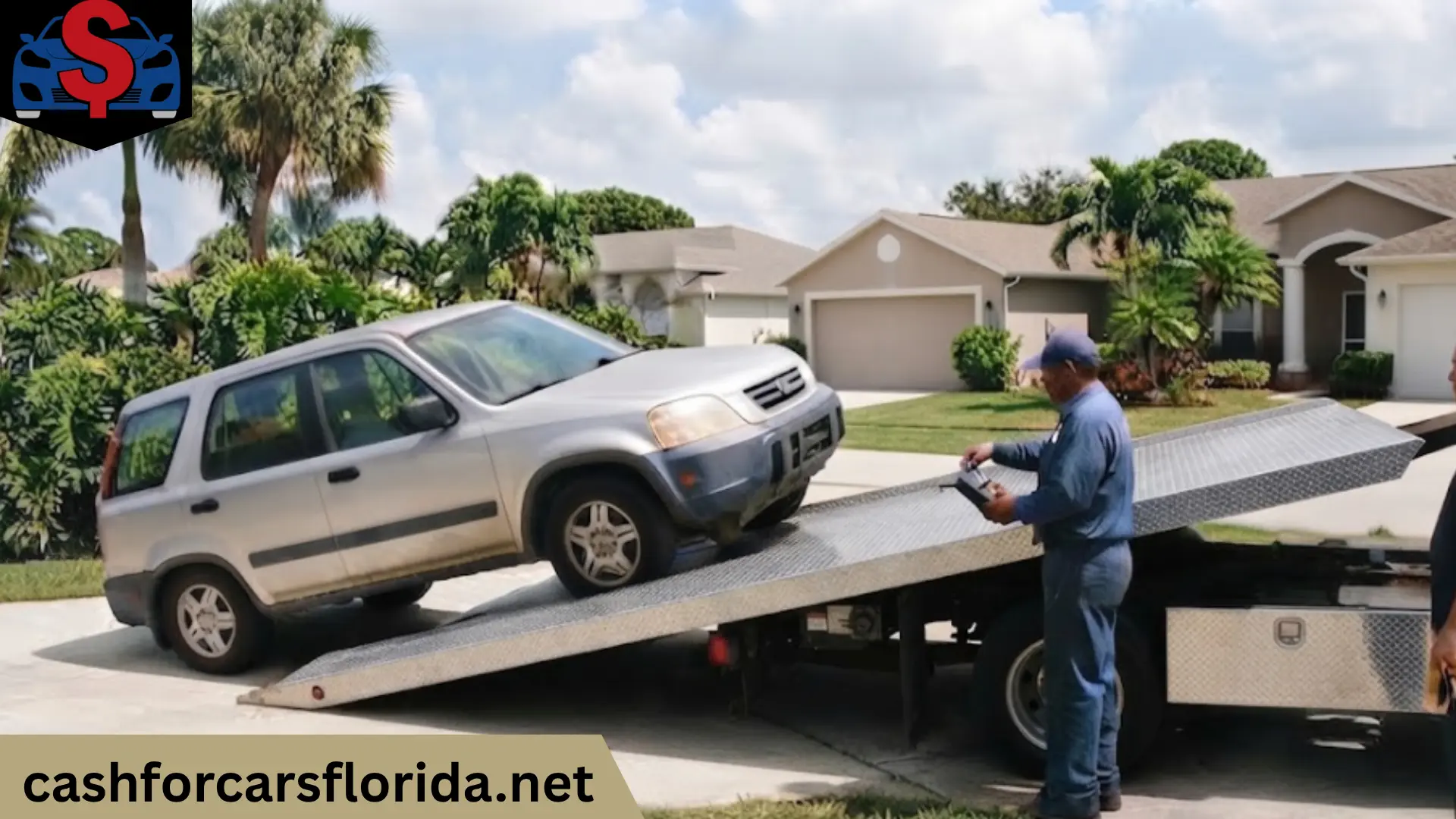
The driver secures your Pilot onto the tow truck using specialized equipment designed to prevent transport damage. Modern professional tow trucks feature sophisticated systems protecting vehicles during loading and transport. Your Pilot gets strapped down securely before any vehicle movement occurs.
The complete loading process typically requires 15 to 30 minutes depending on your vehicle’s accessibility and current operational condition. Professional drivers train extensively in careful handling procedures, particularly when working with non-running vehicles or mechanically compromised vehicles.
Facility Transportation and Professional Inspection
Your Pilot gets transported to the buyer’s professional processing facility. Depending on your Florida location, this facility might be regionally centralized or distributed across multiple locations. At the facility, your vehicle undergoes comprehensive professional inspection.
Trained technicians assess your engine, transmission, electrical systems, and structural integrity. They document actual vehicle conditions versus what was described during the quote process. This detailed inspection determines how your Pilot will be processed and handled next.
Same-Day Payment Processing
Once your Pilot is unloaded and professionally inspected, payment processing begins immediately. Reputable cash buyers complete payment on the same day pickup occurs or within 24 hours maximum. You receive payment via your preferred method including cashier’s check, direct bank transfer, or cash depending on your preference and the buyer’s available options.
You’ll receive official transaction documentation including odometer readings, vehicle identification numbers, and sale terms. Maintain these records for your personal files and tax documentation purposes.
How Salvage or Flood Titles Significantly Affect Your Honda Pilot’s Cash Value
Your Honda Pilot’s title status dramatically impacts the cash value you’ll receive. Understanding different title classifications helps you comprehend what offers actually represent.
What Salvage Title Status Means for Your Pilot
A salvage title designation indicates your Honda Pilot was declared a total loss by an insurance company following significant damage. This typically occurs when professional repair estimates exceed 70 to 80 percent of the vehicle’s pre-damage market value. Once a vehicle receives salvage title status, that designation follows it permanently through all subsequent ownership transfers.
Salvage title status dramatically reduces resale value since most insurance companies refuse normal coverage on salvage-titled vehicles. Traditional banks won’t finance salvage-titled purchases. This eliminates the majority of potential buyers, explaining why cash buyers handle salvage titles routinely while private buyers consistently avoid them.
Even with a salvage title, your Honda Pilot may still be worth money because buyers can recover valuable parts, reusable components, and scrap metal. Cash buyers specialize in vehicles others won’t accept, which enables them to make competitive offers on salvage-titled vehicles.
Understanding Flood Titles and Resulting Water Damage
Florida’s vulnerability to hurricanes and tropical storms means many Pilots experience flood damage. Pilots affected by flooding receive flood title designation. Some states refer to this as a “branded title.”
Flood damage infiltrates every vehicle system. Water saturates electrical wiring, accelerates corrosion of metal components, promotes mold growth in upholstery, and damages engine electronics and computer systems. Even Pilots appearing to run normally immediately after drying out frequently develop serious problems months later as corrosion progresses.
Insurance companies and traditional lenders view flood-titled vehicles with significant caution. Potential buyers worry about latent problems emerging unexpectedly. This makes flood-titled Pilots essentially impossible to sell through conventional channels, yet cash buyers accept them routinely as part of their business model.
Rebuilt Salvage Titles Explained
A rebuilt salvage title means the vehicle was previously declared a salvage vehicle, repaired, and inspected before being approved for a rebuilt title. These vehicles underwent total loss declaration, complete repair, and legal certification as safe for roadway operation. Rebuilt salvage Pilots are more acceptable than pure salvage titles but still trade at meaningfully reduced values.
Cash buyers accept rebuilt salvage vehicles as part of their standard operations. The title history remains visible to future buyers, but the vehicle is legally operational.
How Florida Weather and Rust Damage Affect Your Honda Pilot’s Value
Florida’s climate creates unique valuation challenges for vehicles that simply don’t exist in other American regions.
The Corrosive Salt Air Problem
Coastal Florida exposes vehicles to salt-laden ocean air that dramatically accelerates rust formation. Your Pilot’s exterior undergoes oxidation processes much faster in coastal environments than inland locations. Door edges, window frames, and trunk seals become rust accumulation points. Salt air also attacks undercarriage components invisible to casual observers but suffering significant corrosion.
Intense Sun Exposure and Paint Degradation
Florida’s intense UV radiation damages vehicle paint through continuous exposure. Clear coats break down and degrade, exposing color layers beneath. Paint oxidation creates a chalky, faded appearance making vehicles appear older and neglected despite actual condition.
Rubber components dry out under relentless UV exposure. Door seals, window gaskets, and weatherstripping crack and shrink. This deterioration allows water infiltration creating internal rust and mold problems throughout your vehicle.
Persistent Humidity and Interior Moisture Issues
Florida’s year-round high humidity creates persistent moisture problems even in garaged vehicles. Interior moisture causes mold growth in carpeting, upholstery, and air conditioning systems. Even garage-protected Pilots struggle with humidity infiltration.
Mold creates serious health concerns for potential buyers. A Pilot displaying visible mold becomes nearly impossible to sell through private channels. Cash buyers factor mold damage into offers but at least accept vehicles in this condition.
Hidden Undercarriage Corrosion Damage
Your Pilot’s undercarriage constantly battles Florida’s moisture and salt combination. Brake lines, fuel lines, suspension components, and exhaust systems corrode from underneath. This hidden damage isn’t visible during casual inspection but severely compromises safety and reliability.
Heavy corrosion can render repairs unsafe. Compromised brake components shouldn’t be driven. This drastically reduces both safety and value.
Why Selling for Cash Significantly Beats Trading In Your Honda Pilot
Many people assume trading their older Pilot at a dealership makes logical financial sense. The actual numbers often tell a completely different story.
Dealership Trade-In Disadvantages Explained
Dealerships mainly offer trade-ins to encourage customers to buy another vehicle from them. They’re not motivated to maximize your trade-in value. A problematic Pilot immediately gets devalued as dealerships calculate likely repair costs.
That problematic Pilot consuming their lot space and requiring expensive repairs gets aggressively undervalued. Dealerships need to move problem vehicles quickly through auction or wholesale to other dealers. This urgency directly reduces their offers to you.
Dealerships also factor holding costs and reconditioning expenses into trade-in offers. A Pilot requiring repairs ties up money and facility space. These calculated costs come directly out of your offer.
The Cash Buyer Business Model Advantage
Cash buyers operate under completely different business models not requiring perfect vehicle conditions. Some harvest Pilots for valuable components and parts. Others sell them at specialty auctions. This operational flexibility enables better pricing for problem vehicles.
Cash buyers avoid warranty liability that dealerships must carry. Eliminating warranty obligations removes major cost factors dealerships must build into offers. Without warranty concerns, cash buyers price Pilots more fairly and competitively.
Speed of Transaction Matters Significantly
Dealership trade-ins require purchasing something else. The dealership bundles your trade-in value into a combined transaction making true vehicle value unclear. You’re effectively trading one vehicle for another in a complicated bundled deal.
Cash sales remain straightforward. You sell your Pilot and receive cash only. No obligation to purchase anything else. No negotiating multiple vehicles. Just a clear, honest transaction.
FAQs
How quickly can I get a cash offer for my Honda Pilot?
Most buyers provide preliminary quotes within minutes of your initial inquiry. Final offers come within 24 hours after a representative gathers additional details and verifies information. Once you accept an offer, pickup scheduling typically happens within 48 hours.
Do I need a perfect clean title to sell my Honda Pilot for cash?
No. Cash buyers accept Pilots with salvage titles, flood titles, rebuilt titles, or even missing titles. Title status affects your offer amount, but doesn’t prevent selling. Some buyers guide you through duplicate title replacement processes.
What if my Honda Pilot doesn’t run anymore?
Non-running Pilots are completely acceptable for cash buyers. Your vehicle retains value for parts and materials even with a seized engine. Non-operation doesn’t eliminate worth in the cash market.
Can I sell my Pilot if I still owe money to a lender?
Yes. Cash buyers coordinate with lenders paying off outstanding loans from sale proceeds. After the loan is paid off, you receive any money left over from the sale. Mention loan status early when getting quotes.
What happens to my Honda Pilot after pickup?
This depends on the condition. Mechanically sound Pilots with clean titles get cleaned and resold. Problem Pilots get harvested for valuable parts and materials. Nothing wastes; your Pilot’s value gets extracted through parts sales or recycling.
Is there value in a Honda Pilot with flood damage?
Yes. Flood-damaged Pilots have value through salvage, parts, and materials. Cash buyers specifically work with flood-titled vehicles. Values are lower than clean-titled Pilots but significant worth remains.
How do I prepare my Honda Pilot for pickup?
Remove personal items from every compartment. Take out electronics you installed yourself. Have all keys ready. Clear your driveway of obstacles.
Will my credit score get affected by selling my Pilot?
Selling doesn’t directly affect credit. Outstanding loans satisfied through sale proceeds might improve credit. Avoid multiple credit inquiries around the sale date.
What documents do I need for selling?
Your vehicle title proving ownership is essential. Government-issued ID is required. Maintenance records strengthen offers but aren’t required.
How do buyers value my Honda Pilot?
Buyers assess year, mileage, condition, title status, and market demand. They research comparable sales and factor necessary repairs or parts value. Valuation reflects resale or recycling value.

- Why Florida Drivers Choose to Sell Their Honda Pilot for Cash: A Guide to Getting the Best Offer - October 20, 2026
- Should That Old Honda Passport Finally Go For Cash? - October 20, 2026
- How to Sell a Honda CR-V Without a Title in Florida for Cash - October 19, 2026