
Your Honda CR-V Hybrid has been a reliable companion, but now the hybrid battery system is showing signs of trouble. You’ve checked repair quotes and felt your stomach drop at the numbers.You might be considering whether now is the right time to sell your car and move on.This guide explains exactly what happens to your hybrid battery, how it affects your vehicle’s value, and how to sell your Honda CR-V Hybrid for cash without expensive repairs.
Understanding the Honda CR-V Hybrid Battery System
The hybrid battery in your CR-V Hybrid is the heart of its fuel efficiency. This isn’t like a regular car battery that starts your engine. It’s a sophisticated battery pack that stores and releases electrical energy to power the electric motor, work alongside your gas engine, and regenerate energy during braking.
Most Honda CR-V Hybrid batteries contain 144 individual battery cells arranged in modules. They’re designed to last around 10 to 15 years or 150,000 to 200,000 miles. When these cells age, they lose their ability to hold and release energy efficiently.
What many owners don’t realize is that the battery doesn’t need to be completely dead to cause problems. As it degrades, you’ll notice reduced fuel economy, the check engine light appearing, or the battery system going into limp mode to protect itself.
What Happens to Your Hybrid Battery After Pickup
When you sell your Honda CR-V Hybrid with a failed or failing battery, you might wonder where your car goes and what happens to that expensive battery pack.
The Battery Removal Process
Once a vehicle is picked up from your location, it goes to a processing facility. The battery isn’t simply discarded. Professional technicians disconnect the hybrid battery pack with specialized tools and safety procedures. Hybrid batteries contain high-voltage systems that demand careful handling.
Battery Recycling and Reuse
Here’s what many people don’t know: hybrid batteries have a second life. Even when a battery fails in your vehicle, it still contains usable materials and potentially recoverable cells.
About 50 to 60 percent of the battery’s materials can be recycled. Facilities break down the battery packs to extract cobalt, nickel, lithium, and other valuable metals. These materials go back into manufacturing new batteries, reducing the need for mining new materials.
Some batteries with limited degradation enter the second-life market. They’re refurbished and installed in other vehicles or used for stationary energy storage. A battery that no longer meets your CR-V’s performance requirements might power a home backup system or small commercial application.
Environmental Responsibility
Recycling hybrid batteries prevents toxic materials from ending up in landfills. It also reduces environmental impact compared to manufacturing entirely new batteries from raw materials. When you sell your vehicle for cash to a reputable buyer, your battery is handled responsibly through established recycling channels.
Dealership Trade-In vs. Cash Buyers: Understanding the Difference
You have essentially two paths when selling a Honda CR-V Hybrid with battery issues. Understanding how each values your vehicle helps you make the best decision.
How Dealerships Value Hybrid Trade-Ins
Dealerships view hybrid vehicles with battery problems through a specific lens. They look at repair costs, warranty implications, and resale liability. When a dealership accepts a hybrid trade-in with a failing battery, they factor in replacement battery costs immediately.
A dealership typically:
- Deducts the full cost of battery replacement from their offer
- Adds labor costs and diagnostic fees
- Accounts for reconditioning time and equipment needed
- Factors in warranty obligations they’d inherit
This means your trade-in offer drops significantly. Dealerships operate on margins, and a vehicle requiring expensive repairs cuts into those margins. They also need to manage the liability of selling that vehicle to another customer.
Many dealerships won’t even accept a hybrid with a known battery issue because the risk-to-benefit ratio isn’t favorable for them.
How Cash Buyers Evaluate Your Vehicle
Cash buyers like those at Cash for Cars Florida approach hybrid vehicles differently. Instead of viewing the battery issue as a deal-breaker, they evaluate the entire vehicle.
Cash buyers consider:
- The overall condition of the vehicle body, interior, and mechanical components
- The market value of the vehicle for parts and salvage
- The remaining useful life of the vehicle
- The cost to acquire, process, and resell or recycle the vehicle
Cash buyers can often pay more for problem vehicles because their business model doesn’t require every vehicle to be perfectly functional. Some vehicles are harvested for parts. Others are sold at auction to buyers who’ll handle the repairs themselves. This flexibility means better offers for you.
The Real Impact of Hybrid Battery Failure on Resale Value
Understanding how battery issues affect your vehicle’s value requires looking at the broader depreciation picture.
Hybrid Battery Replacement Costs
The hybrid battery plays a major role in determining your Honda CR-V Hybrid’s resale value. Replacing it can cost around $4,000 to $8,000, depending on whether you choose an original manufacturer battery or an aftermarket alternative.
This cost includes the battery pack itself, labor for removal and installation, system diagnostics, and software reprogramming. Some vehicles need additional repairs to the battery management system or charging components.
This single repair can consume 40 to 50 percent of your vehicle’s current market value if your CR-V is older or has higher mileage.
How Battery Problems Create a Value Cliff
A functioning Honda CR-V Hybrid holds decent resale value. The moment the battery fails, that value drops sharply.
A 2016 Honda CR-V Hybrid in good condition might be worth $12,000 to $14,000 in the private market. Add a failed battery requiring replacement, and the value drops to $5,000 to $7,000. The battery issue alone costs you $5,000 to $8,000 in lost equity.
This creates an interesting situation. Since potential private buyers would need to budget for the battery replacement, they simply won’t pay close to the healthy vehicle price.
Current mileage
Service history and maintenance records
Specific battery symptoms (warning lights, reduced efficiency,Why Dealers Struggle with Hybrid Valuations
Dealerships face challenges valuing hybrids because:
- Battery replacement can take 5 to 10 business days, tying up their inventory
- Warranty implications mean they carry liability if the replacement battery fails prematurely
- Battery costs have been rising as demand increases
- Not all dealerships have the specialized equipment to handle hybrid battery work
These factors combined mean dealerships often offer less than independent cash buyers who operate under different business models.
Getting an Accurate Quote on Your Honda CR-V Hybrid
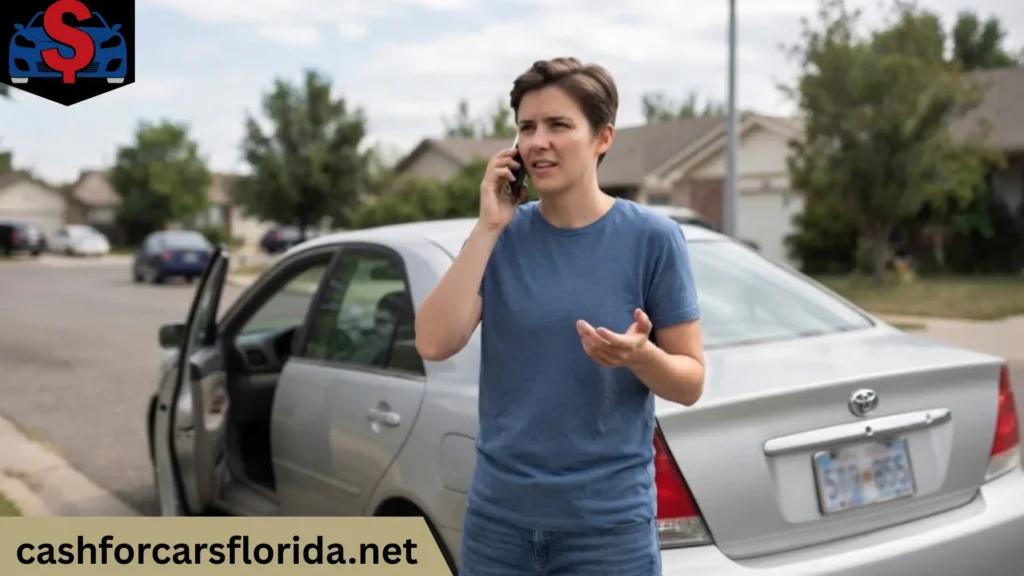
The process of getting a fair offer requires providing detailed information about your vehicle’s condition.
Important Things to Consider Before Requesting a Quote
Gather this information before contacting buyers:
Vehicle year, make, model, and trim level
error codes)
Overall vehicle condition (rust, accident history, interior condition)
Photos from multiple angles
Having this information ready helps buyers give accurate quotes quickly.
The Quote Process for Problem Vehicles
Cash buyers typically evaluate vehicles in this order:
- Initial phone assessment based on your description
- Online quote based on standard values for your model year
- In-person inspection if you’re moving forward
- Final offer after seeing the vehicle
For hybrids with battery issues, the in-person inspection matters more than usual. Technicians will likely:
- Connect diagnostic equipment to check battery error codes
- Test the hybrid system’s operation
- Assess whether the battery is failing gradually or completely dead
- Check for secondary damage from battery failure
This inspection might reveal whether your battery issue is isolated or if other components were damaged.
How Hybrid Cars Lose Value Compared to Gas-Powered Vehicles
Hybrid depreciation follows a unique pattern that’s important to understand.
The Early Years Hybrid Advantage
When new, hybrid vehicles often command a premium over their gas-only counterparts. Many buyers value hybrid cars because they use less fuel and produce fewer emissions than traditional gas-powered vehicles.This premium can add $1,500 to $3,000 to the purchase price.
The Mid-Life Hybrid Penalty
As hybrids age, depreciation patterns shift. A hybrid loses value faster than comparable gas vehicles between years 3 and 7. This occurs because:
- Gas-only alternatives become cheaper options
- Maintenance costs rise as hybrids age
- Buyers worry about battery replacement expenses
- Used hybrid inventory increases supply and reduces demand
The Battery Question Problem
The biggest depreciation pressure comes from battery uncertainty. Gas car buyers don’t worry about catastrophic system failure affecting resale value. Hybrid buyers always consider battery age and condition.
Long-Term Value Recovery
Interestingly, older hybrids with healthy batteries sometimes recover value. A 2008 Honda CR-V Hybrid with 120,000 miles and a functioning battery might be worth more than a 2012 model with 95,000 miles if the older vehicle’s battery has years of life remaining.
This demonstrates that for hybrids, battery condition matters more than mileage for value determination. Owners of other Honda hybrids face the same battery question, whether it is a Honda Accord Hybrid or a Honda Clarity Plug-in Hybrid with battery trouble.
| Vehicle Aspect | Gas CR-V | Hybrid CR-V |
| New vehicle premium | Base price | 1,500-3,000 more |
| Year 3 value retention | 65% | 58% |
| Year 5 value retention | 55% | 45% |
| Year 7 value retention | 45% | 35% |
| Primary value factor | Mileage/condition | Battery status |
| Depreciation driver | Standard wear | Battery age + concerns |
Why Your Options Matter Now
When your Honda CR-V Hybrid battery fails, you’re facing a genuine crossroads.
Repair and Keep
This makes sense only if you plan to keep the vehicle many more years. If you love your CR-V and drive it regularly, investing in a new battery might make financial sense for personal satisfaction.
Trade-In at Dealership
This is convenient but typically offers the least money. Dealerships need to protect themselves against unknown battery issues and liability.
Sell Privately
This requires finding a buyer willing to handle the repair, spending time showing the vehicle, and answering technical questions. Most private buyers are afraid of hybrid battery issues.
Sell for Cash
Cash buyers accept vehicles with battery issues and often provide fair value that reflects the vehicle’s remaining worth. This option eliminates your stress about explaining the problem to potential buyers.
The Bottom Line on Hybrid Battery Economics
Your hybrid battery failure isn’t the end of your vehicle’s utility. It represents a decision point about whether investing in repairs makes sense for your situation.
The repair cost creates a reality where private sales become difficult. Buyers demand significant discounts to account for the repair they’ll need to handle. This means the difference between what a cash buyer offers and what you’d receive from a private sale might be smaller than you think.
Additionally, you save money on holding costs, advertising, and the time spent showing the vehicle to unqualified buyers.
FAQs
What’s wrong with my Honda CR-V Hybrid battery exactly?
Hybrid batteries contain hundreds of individual cells that slowly lose capacity over time. When enough cells degrade, the entire battery pack can no longer function properly in your vehicle. This happens gradually, which is why you notice reduced fuel economy before the system completely fails.
Can a failed hybrid battery be repaired instead of replaced?
Most hybrid batteries can’t be partially repaired. Once the battery pack fails, replacement is typically the only option. Some aftermarket companies offer battery conditioning or refurbishment, but results vary and reliability is uncertain.
How long does a hybrid battery last?
Honda typically rates CR-V Hybrid batteries for 10 to 15 years or 150,000 to 200,000 miles. Real-world lifespan varies based on climate (hot climates degrade batteries faster), driving habits, and maintenance history.
Will my extended warranty cover hybrid battery replacement?
It depends on your specific warranty and when the battery failed. Factory warranties typically cover hybrid batteries for 8 to 10 years. Extended warranties vary in their coverage. Always check your warranty documents or contact your dealer for specifics.
What does a cash buyer do with my vehicle after purchase?
That depends on the vehicle’s condition. Some are sold at auction to buyers who will repair them. Others are harvested for parts. Batteries and valuable components are recycled. The buyer determines the best use for the vehicle based on its condition and market value.
Why do cash buyers sometimes offer more than dealerships for problem vehicles?
Cash buyers have lower overhead and operate under different business models. They’re not bound by the same warranty liabilities as dealerships. They can accept vehicles that dealerships won’t touch, which means they can offer better prices.
Is there any value in the failed hybrid battery itself?
Yes, but not directly to you. The battery contains valuable materials like cobalt, nickel, and lithium. Recyclers recover these materials, which is why responsible battery disposal is important. This recycled material goes into new batteries, reducing mining needs.
What happens if I ignore the battery problem and keep driving?
Continuing to drive with a completely failed battery is unsafe and impractical. The vehicle’s electric motor won’t assist your gas engine, which means dramatically reduced fuel economy and performance. The system may enter limp mode to protect itself, severely limiting your vehicle’s operability.
Should I get a new battery before selling?
For a cash sale, replacing the battery before selling rarely makes financial sense. You’d spend $4,000 to $8,000 on the battery, but the vehicle’s market value might only increase by $2,000 to $4,000. You’d take a loss on the repair investment.
How much will a cash buyer offer for my Honda CR-V Hybrid with battery problems?
Offers vary based on your vehicle’s year, mileage, overall condition, and market conditions. However, a cash buyer typically offers 40 to 60 percent of what a same-year vehicle in good condition would fetch. Getting specific quotes requires providing vehicle details.