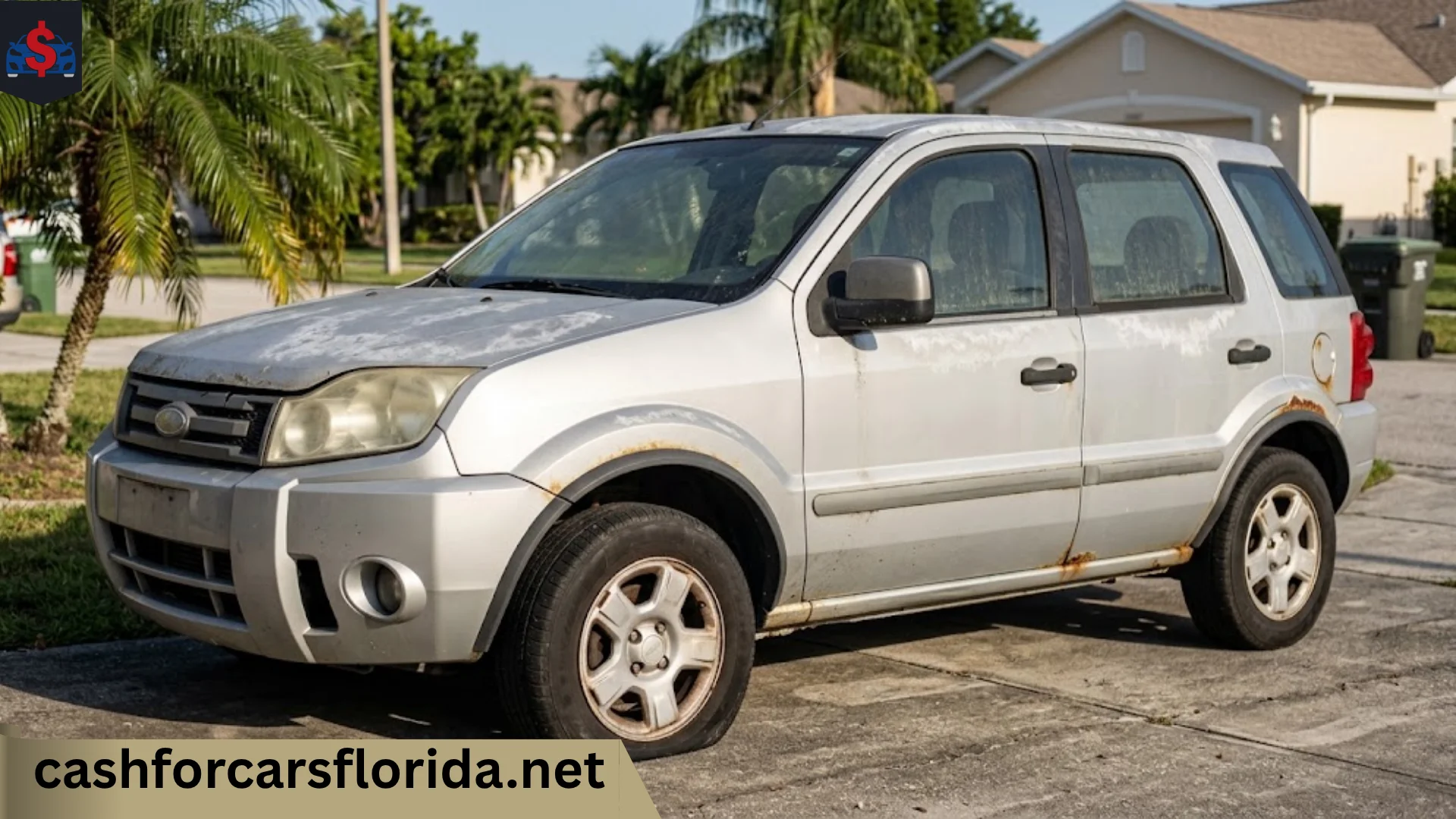

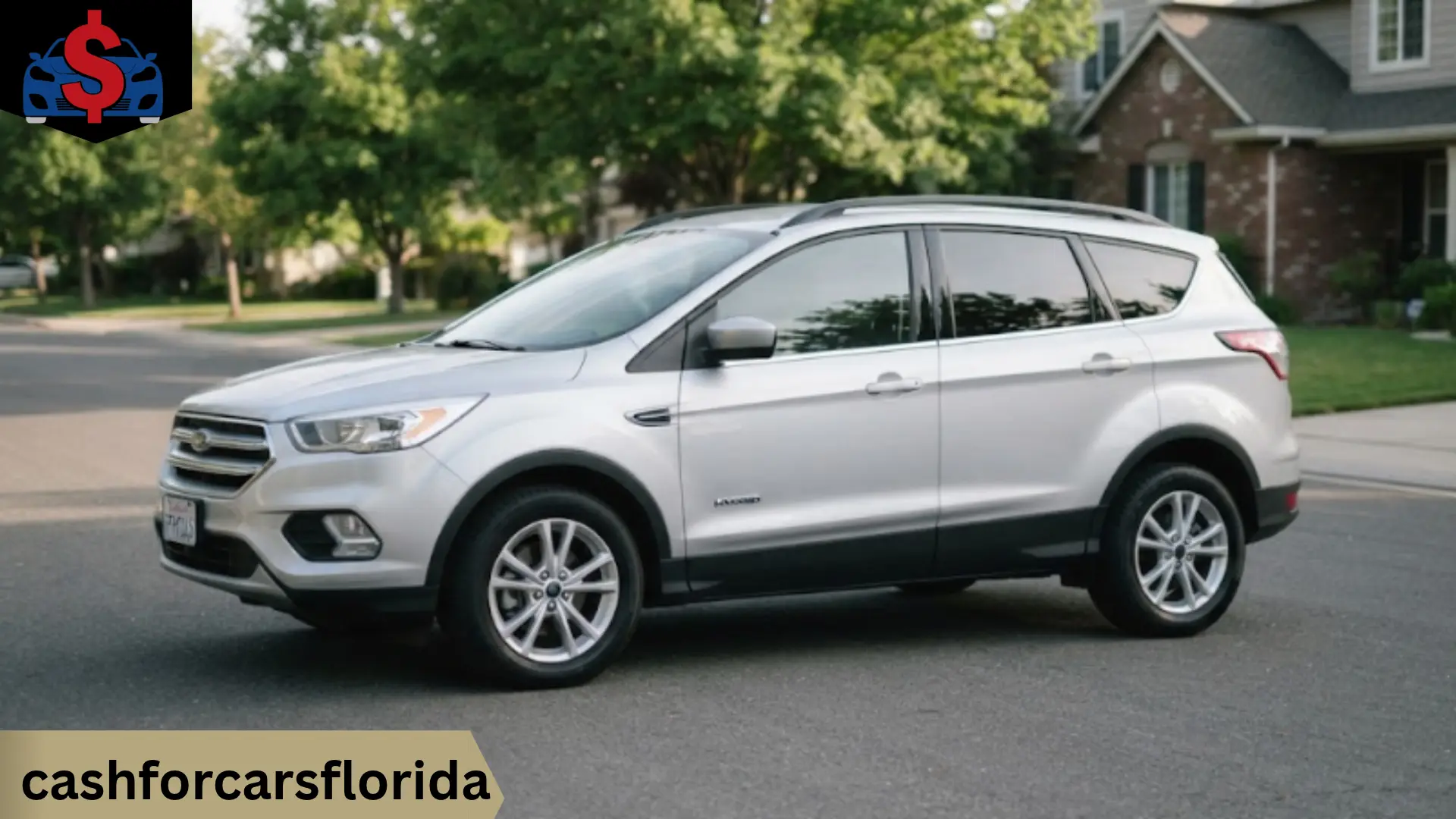
Your Ford Escape Hybrid has been a reliable companion for years. But lately, you’ve noticed something troubling. The battery warning light keeps popping up on your dashboard. The car doesn’t get the same gas mileage it used to. You’re wondering if this hybrid battery problem has killed your car’s value completely.
Here’s the truth that most people don’t realize: a failing hybrid battery doesn’t mean your Ford Escape Hybrid is worthless. It means it has a different path forward.
A dealership or trade-in center may value a hybrid with battery issues much lower. They’ll tell you the replacement cost is astronomical and use that to justify a lowball offer. But there’s another option that many Ford Escape Hybrid owners overlook. Companies that specialize in buying vehicles as-is pay cash for hybrids regardless of battery condition.
This guide explains exactly how hybrid batteries affect resale value, why cash buyers approach these vehicles differently than dealerships, and how you can get an accurate quote for your Ford Escape Hybrid right now.
Why Hybrid Batteries Scare Traditional Buyers
When a Ford Escape Hybrid shows battery problems, something curious happens in the automotive market. The vehicle’s value doesn’t just decrease. It sometimes gets abandoned by traditional buyers entirely.
Here’s why. Traditional dealerships follow a formula. They calculate resale value based on what they think they can sell the car for at retail. A hybrid with a failing battery creates uncertainty. They don’t know if the battery will fail completely during the owner’s first month. They don’t know if repair costs will exceed the vehicle’s value. This uncertainty makes them uncomfortable.
So they offer less. Much less.
But here’s what they’re not considering: Ford Escape Hybrids are built on solid mechanical foundations. A failing battery doesn’t mean a failing engine. It doesn’t mean transmission problems or rust. It means one specific system needs attention.
Cash buyers understand this difference. They see the vehicle for what it actually is: a functional car with one known issue. That perspective changes everything about what it’s worth.
How Dealerships Value Hybrid Trade-Ins Differently
When you walk onto a dealership lot with your Ford Escape Hybrid, several things happen in quick succession.
First, they scan your vehicle report. The moment they see the hybrid battery warning light or recent hybrid system repairs, they make a mental note. This will be their anchor point for negotiation.
Second, they calculate the worst-case scenario cost. A hybrid battery replacement for a Ford Escape can be expensive. They might even quote this cost to you directly. This creates psychological pressure. You start thinking your car is worth much less because of the battery.
Third, they make their offer. It’s usually 40% to 60% below what they’d offer for the same model year Escape with a healthy conventional engine. Why? They’re factoring in the worst-case scenario costs and their own profit margin.
Here’s the key insight: dealerships aren’t trying to buy your hybrid. They’re trying to buy inventory that’s easy to sell. A hybrid with battery issues is complicated inventory.
Cash buyers operate under completely different economics. They’re not planning to retail your vehicle. They’re evaluating it based on different criteria. They assess the actual mechanical condition. They consider which components have real value. They factor in that hybrid systems, even with battery issues, can be repaired, refurbished, or recycled in ways that have genuine market value.
This is why the same Ford Escape Hybrid might get a $4,000 offer at a dealership but a significantly better cash offer from a specialized buyer.
Why Hybrids Depreciate Differently Than Gasoline Vehicles
Understanding hybrid depreciation requires understanding how people perceive these vehicles over time.
A gasoline-powered Ford Escape follows a predictable depreciation curve. It loses value steadily as it ages and accumulates mileage. At year five or six, it reaches a stable value based on reliability expectations and market demand.
Hybrid vehicles follow a different path.
In their first few years, hybrids hold value well or even outperform comparable gas models. This is because early buyers are motivated by fuel economy benefits and federal tax incentives. There’s strong demand.
But something happens around year five or six. The technology starts becoming ordinary. Newer hybrids offer better efficiency. More importantly, the original hybrid battery is now aging toward the end of its typical lifespan.
This is when hybrid resale values can drop sharply. Sharper than comparable gas models.
Why? Because buyers suddenly shift their thinking. They stop focusing on fuel economy benefits and start focusing on battery replacement risk. Uncertainty about an aging hybrid system matters more than the benefits of hybrid technology itself.
Here’s the thing that dealerships emphasize heavily: battery replacement costs are real and significant. This legitimate concern becomes the entire basis of their valuation.
What they don’t emphasize is that not all hybrid batteries fail catastrophically. Some gradually lose efficiency. Some run for years beyond their expected lifespan. And many can be repaired or worked around rather than completely replaced.
These nuances don’t fit into dealership valuation formulas. So they ignore them.
How Condition and Mileage Change Your Quote
When evaluating your Ford Escape Hybrid, both cash buyers and dealerships assess condition and mileage. But they weigh these factors differently.
The Dealership Approach
Dealerships create a straightforward matrix:
- High mileage + battery problems = significant discount
- Low mileage + battery problems = moderate discount
- Recent battery replacement = normal resale value
The logic seems reasonable. But it locks out most hybrid owners with aging batteries. If you’re above 120,000 miles with an aging hybrid system, dealerships often won’t engage seriously.
The Cash Buyer Approach
Cash buyers evaluate the complete picture:
- Engine and transmission condition matter as much as battery status
- Maintenance history significantly affects value
- Actual battery performance versus theoretical replacement costs
- Current market interest in the vehicle based on its condition
- Salvage and parts value if the vehicle can’t be resold as-is
A 2015 Ford Escape Hybrid with 145,000 miles and a failing battery might get $3,500 from a dealership. The same vehicle might command $6,500 to $8,500 from a cash buyer who understands that the engine still has 50,000 to 75,000 miles of life remaining.
This difference isn’t about one party being unfair. It’s about how they plan to handle the vehicle after purchase.
The Real Impact of Hybrid Battery Replacement Costs
Let’s address the battery elephant in the room directly.
A Ford Escape Hybrid battery replacement at a dealership costs between $4,000 and $8,000. Sometimes more. This is a legitimate, substantial cost.
When you’re trading in a vehicle, dealerships use this number as their primary justification for a low offer. They say they have to account for this potential repair.
But here’s what gets missed in this calculation:
A failing battery doesn’t automatically mean replacement is the only option. Sometimes hybrid battery systems can be repaired. Sometimes specific modules can be replaced instead of the entire pack. Sometimes the battery continues functioning acceptably even when warning lights illuminate.
The issue dealerships have is that they can’t predict which scenario will play out. So they assume the worst scenario and price accordingly.
Cash buyers who specialize in vehicles as-is have different options. They might repair the specific issue. They might refurbish the battery pack. They might sell the vehicle to a buyer who can tolerate or repair the battery themselves. They might harvest valuable components if the vehicle can’t be resold whole.
Each of these paths has different economics than retail dealership resale.
Comparison: Dealership Trade-In vs. Cash Buyer
Here’s how the two buying models stack up across key factors:
| Factor | Dealership Trade-In | Cash Buyer |
| Evaluation Focus | Retail resale potential | Actual mechanical value |
| Battery Issues Weight | Heavy penalty to offer | Factored into realistic quote |
| Time to Close | 3-7 days with purchase contingency | Same-day or next-day cash |
| Flexibility on Condition | Limited to retail-ready vehicles | Accepts as-is vehicles |
| Towing Cost | Often included in trade-in value reduction | Typically free |
| Need for Repairs | You might be expected to fix issues first | None required |
| Offer Process | Multiple people, multiple estimates, pressure tactics | Direct evaluation, straightforward offer |
The key difference isn’t that one party is inherently better. It’s that they’re serving different purposes in the automotive marketplace.
How to Get an Accurate Quote on Your Ford Escape Hybrid
Getting an accurate valuation requires providing complete information. Here’s what matters:
Information You’ll Need Ready
- Vehicle details: Year, trim level, exact mileage, exterior color, transmission type
- Mechanical condition: When the hybrid battery warning light first appeared, any repairs already attempted, when the last service was performed
- Battery history: Has the battery been recently tested, replaced, or serviced? How long have you had the vehicle? When did battery issues start?
- Overall condition: Any accidents or frame damage, interior condition, whether it runs and drives, if there are any other warning lights
- Maintenance records: This matters significantly. A well-maintained hybrid with battery problems can be worth more than a poorly maintained one with similar issues.
What Honest Evaluators Will Ask
Real buyers will ask follow-up questions:
- Does the car start and drive normally aside from the hybrid system issue?
- Has a technician diagnosed the battery problem, or are you relying on the warning lights?
- What’s your timeline for selling?
- Have you gotten other evaluations?
These aren’t tricks. They’re gathering information to make an accurate offer.
Red Flags in the Evaluation Process
A buyer who gives a price without learning about the vehicle may not be giving you a reliable offer. If someone pressures you to decide immediately, that’s a warning sign. If someone significantly changes their offer after inspection, something went wrong with their initial process.
Accurate evaluations take time and thorough inspection. That’s not a bad thing. That’s a good thing.
Why Ford Escape Hybrids Still Have Real Value
Here’s something the pessimistic view of hybrid resale values misses: Ford Escape Hybrids still have significant real-world demand.
These vehicles combine Ford’s reputation for durability with hybrid efficiency. They’re crossovers rather than sedans, so they can still appeal to buyers who want extra cargo room and everyday practicality. Ford also has steady demand in the used-car market. Even with battery problems, a Ford Escape Hybrid may still attract buyers compared with some older gas-powered vehicles. It has technology that buyers want. It has a brand name that still carries weight.
The battery issue is real. But it’s not a death sentence for resale value.
What matters is finding a buyer who values the vehicle for what it actually is rather than discounting it based on worst-case battery replacement scenarios. That buyer usually isn’t a traditional dealership. But it’s definitely not impossible to find.
When You Should Sell to a Cash Buyer Instead
Certain situations make cash buyers the better choice:
- Your timeline is tight: Dealerships take weeks to process trade-ins. Cash buyers can complete transactions in one day.
- Your hybrid has other issues beyond the battery: High mileage, mechanical problems, or cosmetic damage that retail buyers would reject doesn’t bother cash buyers nearly as much.
- You want the fastest process possible: No haggling, no contingencies, no surprise deductions at closing.
- You’re going to repair the battery anyway: Why spend $5,000 on repairs only to get offered less by a dealership? Sometimes selling as-is to a cash buyer nets more than repairing then selling.
- The dealership offer insulted you: If their offer seemed unreasonably low, getting a second opinion from a cash buyer is always worthwhile.
What Happens to Your Ford Escape Hybrid After Sale
Understanding what buyers plan to do with your vehicle can help you understand their offers.
Some cash buyers will repair your Ford Escape Hybrid and resell it to another consumer. These buyers are focused on finding fixable vehicles that still have demand.
Others will refurbish the hybrid battery using refurbished components, extending its life significantly while keeping costs lower than full replacement.
Some focus on parts value and recycling. Even a hybrid that can’t be resold whole has valuable components. Catalytic converters, the hybrid motor, the regenerative braking system, and various electronics all have aftermarket value.
None of these outcomes is wasteful or environmentally harmful. They’re all legitimate ways that used vehicles stay in circulation rather than going straight to junkyards.
Knowing this helps. Your Ford Escape Hybrid has value in multiple markets. That’s actually a positive thing. It’s why you can get cash for it even with battery issues.
FAQs
How much will a hybrid battery replacement actually cost me?
Costs vary widely. Factory replacement at a Ford dealership runs $4,000 to $8,000. Independent shops with aftermarket batteries might cost $2,500 to $4,500. Battery refurbishing runs $1,500 to $3,000. The exact cost depends on your specific Ford Escape Hybrid model year and which option you pursue.
Can a Ford Escape Hybrid battery be repaired instead of replaced?
Sometimes. If specific modules are failing, those modules can occasionally be repaired or replaced individually. A hybrid specialist can diagnose whether your vehicle is a candidate for repair versus full replacement. This is why getting a pre-sale hybrid inspection is valuable.
Will my Ford Escape Hybrid lose value if I don’t fix the battery?
It will be worth less than the same model with a healthy battery. But it still has resale value. The question is whether the amount you’d get for it now exceeds what you’d spend fixing it. For many owners, the answer is yes.
How long can a Ford Escape Hybrid battery usually last?
Most Ford hybrid batteries are designed to last 150,000 to 200,000 miles. Some fail earlier due to defects or extreme conditions. Some last well beyond 200,000 miles. Actual lifespan varies significantly.
Is buying a Ford Escape Hybrid with battery issues a bad investment?
Not necessarily. If you buy it at the right price and understand the battery risk, it can still be a good value. The key is knowing what you’re buying and pricing it accordingly.
What’s the difference between a battery warning light and actual battery failure?
Warning lights can indicate several things. Sometimes they mean the battery is genuinely failing. Sometimes they indicate a sensor problem or a minor module issue. A hybrid specialist can diagnose the exact problem. Don’t assume a warning light means catastrophic failure.
Can I trade in a Ford Escape Hybrid with a failing battery?
Yes, but expect the dealership to heavily discount the offer. Getting quotes from multiple buyers before deciding which path to take is smart.
How quickly can I sell a Ford Escape Hybrid with battery issues?
Cash buyers typically complete the sale within 24 hours and can pick up the vehicle same-day or next-day. Dealership trade-ins take longer because they involve multiple steps and sometimes purchase contingencies.
Will environmental or emission systems on my Ford Escape Hybrid be affected by a failing battery?
Not directly. A failing hybrid battery affects the hybrid system itself. It doesn’t impact emissions systems, catalytic converters, or environmental compliance. The vehicle can still pass emissions tests.
Is there any warranty on a used Ford Escape Hybrid with battery issues?
That depends on your purchase agreement. Some used vehicle purchases include limited powertrain warranties. Read the terms carefully. Some buyers offer no warranty on as-is purchases. Some offer limited protection.
The Bottom Line
A failing battery doesn’t make your Ford Escape Hybrid worthless. It makes it a different category of vehicle that appeals to different buyers.
Dealerships value it based on worst-case scenario repair costs and retail resale potential. That approach produces low offers because hybrid battery problems create uncertainty in their specific business model.
Cash buyers value it based on actual mechanical condition, real market demand, and multiple paths to profit. That approach often produces better offers because they have more flexibility in how they handle the vehicle.

The right choice for you depends on your timeline, your financial situation, and how much hassle you want to experience selling your car.
If you’ve got a Ford Escape Hybrid with battery issues and you’re in Florida, there are buyers ready to offer you cash today. No negotiations. No hidden deductions. Just a straightforward, fair evaluation of your vehicle’s actual value.